


Natural Ways to Relieve Neuropathy Pain and Improve Nerve Health
The most effective natural approaches for neuropathy pain include targeted supplementation with PEA, omega-3 and more, anti-inflammatory nutrition, consistent exercise, and sleep support. These aren’t alternatives to medical care, they’re the interventions most likely to address the underlying nerve environment rather than just mask symptoms. For many people, meaningful improvement is possible within eight to sixteen weeks of consistent effort.
What Is Neuropathy, and Why Is It So Hard to Treat?
Peripheral neuropathy happens when the nerves outside your brain and spinal cord are damaged or dysfunctional. Those nerves carry signals for pain, temperature, touch, and movement — so when they’re compromised, the result is burning, tingling, numbness, or shooting pain, most often in the hands and feet.
Diabetes is the most common cause. But chemotherapy, alcohol use, certain infections, B12 deficiency, and physical injuries can all trigger it.
What makes neuropathy particularly frustrating is the treatment gap. Most prescriptions used for it — antidepressants, anti-seizure medications like gabapentin — were designed for other conditions. They reduce the signal. They don’t address why the nerves are misfiring in the first place.
That’s where the natural approaches below are actually doing something different.
Exercise: The Most Underrated Nerve Intervention
Regular aerobic exercise improves endoneurial blood flow — the circulation inside nerve tissue itself. Damaged nerves are often starved of oxygen and nutrients because the small vessels supplying them have been compromised. Exercise helps restore that supply.
Beyond circulation, exercise triggers the release of endorphins and endocannabinoids, compounds your body produces naturally that reduce pain sensitivity and support nerve repair. [Citation: Balducci S, et al. Diabetes Care, 2006 — exercise and diabetic neuropathy outcomes]
Thirty minutes of moderate activity most days is the evidence-based target. Walking, swimming, and cycling are all appropriate starting points for people managing neuropathic pain.
Dr. Meredith Warner’s Perspective “I tell my patients that exercise is not optional for nerve health. The vascular component alone, what improved circulation does for nerve tissue, is significant enough that I’d put it ahead of most supplement protocols as a first step.”
Increase Your Heart Rate & Blood Flow
Damaged nerves often aren’t getting the right amount of blood flow. This can make it even more difficult for them to function properly.
To increase your heart rate, you should exercise regularly. Regular exercise can also help you manage your weight and therefore improve diabetes symptoms. But exercise also helps release natural endorphins and endocannabinoids, which can relieve pain and help heal damaged nerve endings.
For temporary neuropathy pain relief, you can also take warm baths. This will soothe neuropathy “pins and needles” while increasing bloodflow to the hands and feet for added relief.
Many advocate for epsom salt soaks. Epsom salt is just magnesium sulfate; magnesium has many beneficial effects for nerves.
Exercise can also help you fight oxidative stress, which can damage your nervous system. One of the main ways that diabetes causes nerve damage is through excessive oxidative stress on nerves and the brain.
Read More: How Oxidative Stress Harms Nervous System Health
What You Eat Either Feeds or Fights Nerve Damage
B vitamins are non-negotiable. B1, B6, and B12 are all required for myelin production — the protective sheath that wraps around nerve fibers. When that sheath degrades, signals misfire. B12 deficiency alone is a recognized direct cause of peripheral neuropathy. [Citation: Stabler SP. New England Journal of Medicine, 2013 — B12 deficiency and neurological consequences]
Worth noting: if you’re taking metformin for diabetes, it is a documented B12 deplete. Ask your doctor to check your levels.
Blood sugar management is structural, not dietary preference. Excess glucose generates free radicals — unstable molecules that attack nerve fibers at the cellular level. This is called oxidative stress, and it’s the primary driver of diabetic neuropathy. Every refined carbohydrate you reduce is measurably less oxidative load on your nerves. [Citation: Feldman EL, et al. Nature Reviews Neurology, 2019 — mechanisms of diabetic neuropathy]
Omega-3 fatty acids reduce neuroinflammation. Fatty fish, walnuts, and flaxseed supply EPA and DHA, the building blocks for compounds your body uses to actively resolve inflammation rather than just suppress it. These are the same fatty acids found in therapeutic-dose supplementation.
Sleep: Where Nerve Repair Actually Happens
Neuropathic pain is reliably worse at night. Without daytime distraction, burning and tingling become more prominent, and the pain itself disrupts sleep, which lowers your threshold for pain the next day. It’s a cycle.
Studies show that people with peripheral neuropathy who sleep poorly report significantly higher pain scores than those who sleep well, even with the same degree of nerve damage. [Citation: Smith MT & Haythornthwaite JA. Sleep Medicine Reviews, 2004 — sleep and chronic pain]
Magnesium deficiency, which is extremely common, directly worsens both sleep quality and pain sensitivity. Correcting it is a low-cost, high-impact first move.
Consider Supplementation
Free radicals wreak havoc on every part of your body – and can damage nerve endings. As your body struggles to maintain balance between free radicals and antioxidants, nerve damage can occur. This is why taking a daily antioxidant supplement is an excellent way to combat neuropathy!
Most supplements marketed for nerve pain are underdosed or poorly formulated. The ingredients with the strongest clinical footing for neuropathy are specific, and dose matters.
Alpha-Lipoic Acid (ALA) is both fat and water soluble, which gives it unusually broad reach inside the body. It recycles glutathione, Vitamin C, and Vitamin E, and it directly improves blood flow inside nerve tissue. Multiple randomized controlled trials support its use for diabetic peripheral neuropathy at 600mg daily. [Citation: Ziegler D, et al. Diabetic Medicine, 2004 — SYDNEY trial, ALA and neuropathic symptoms]
PEA (Palmitoylethanolamide) works at the level of mast cells and glial cells — the support cells surrounding neurons. When those cells become overactivated, they amplify pain signals. PEA calms that response. It has been studied in over a dozen randomized controlled trials for chronic pain conditions. At 600mg, it’s the dose used in most positive trials.
NAC (N-Acetyl L-Cysteine) raises glutathione, your body’s primary antioxidant defense, directly inside nerve cells. This matters because the standard antioxidants you eat can’t easily cross into nerve tissue. NAC can. [Citation: Molecular Pain, 2010 — NAC and neuropathic pain models]
Omega-3s at therapeutic doses (1400mg and above) produce specialized pro-resolving mediators (SPMs). These are compounds that actively resolve neuroinflammation rather than just blunt it. That’s a mechanistically different action than most anti-inflammatory supplements.
Dr. Meredith Warner’s Perspective “The reason I formulated the Nervous System Multi the way I did is that neuropathy isn’t one problem. It’s oxidative damage, it’s neuroinflammation, it’s poor cellular energy production happening at the same time. A single ingredient can’t address all of that. The formula has to work across multiple pathways.”
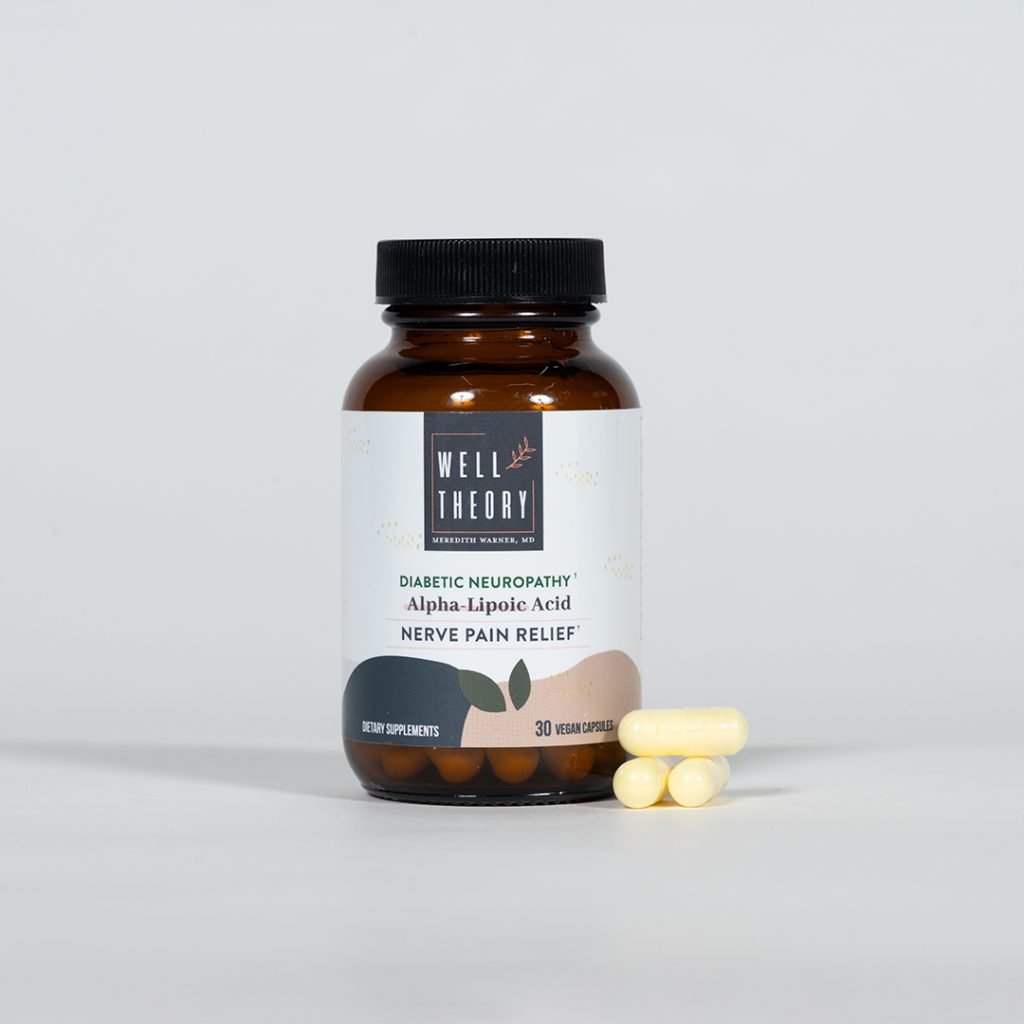
Alpha-Lipoic Acid
$34.00
ALA is one of the more well-studied natural compounds for neuropathic pain, with a reasonably strong evidence base — particularly for diabetic peripheral neuropathy (DPN).
ALA works through several pathways relevant to nerve pain:
- Antioxidant activity — it’s both fat- and water-soluble, giving it unusually broad free radical scavenging capability
- Mitochondrial support — acts as a cofactor in energy metabolism; nerve cells are highly energy-dependent
- Regeneration of other antioxidants — recycles glutathione, Vitamin C, and Vitamin E
- Anti-inflammatory — reduces NF-κB activation, lowering pro-inflammatory cytokine production
- Nerve blood flow — improves endoneurial microvascular circulation, which is compromised in diabetic neuropathy
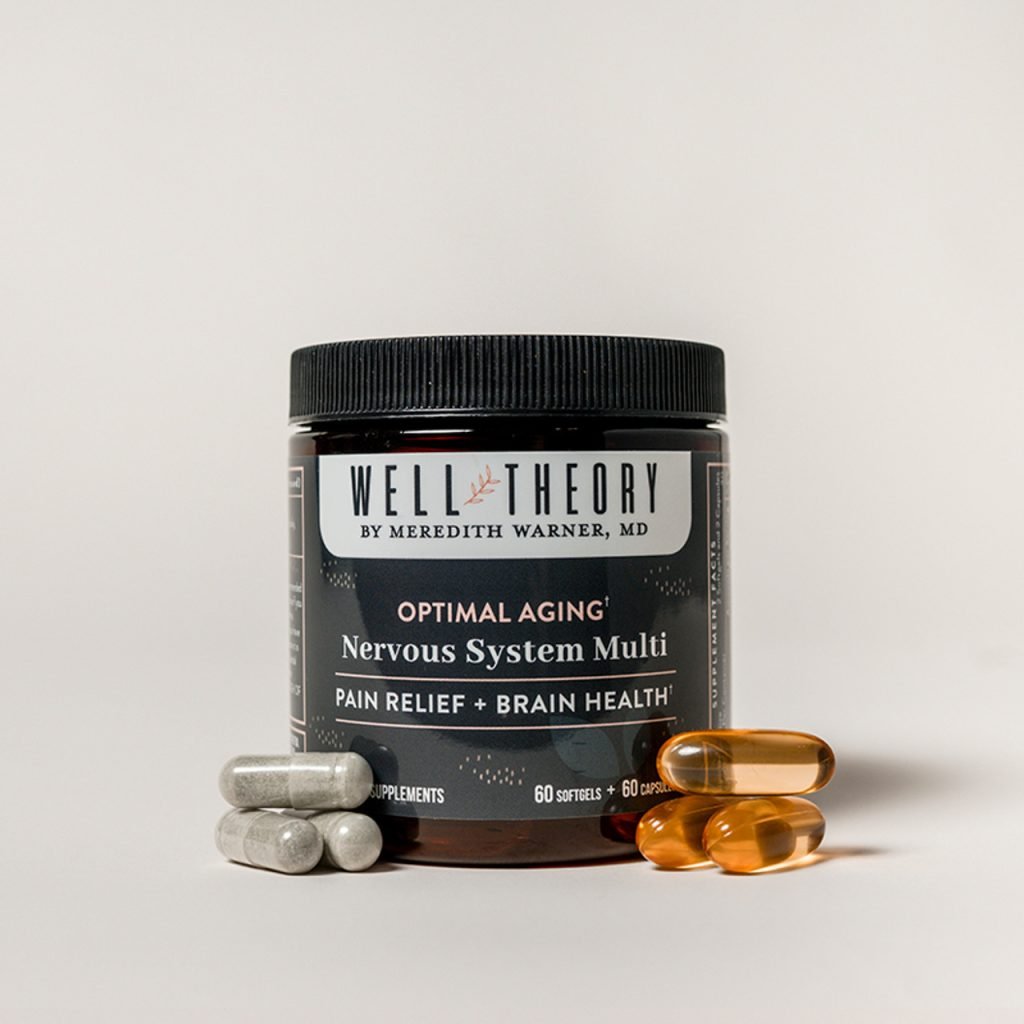
Nervous System Multi
$64.00
Targets nerve pain from five directions:
- Mast cell & glial cell suppression — PEA (600mg) + Luteolin (100mg) calm neuroinflammation at the nerve level; studied together and more effective in combination
- Antioxidant nerve protection — NAC (300mg) raises glutathione to shield nerve fibers from oxidative damage
- Mitochondrial support — Resveratrol (400mg, 98% trans-resveratrol) activates SIRT1 pathways in energy-dependent nerve cells
- Inflammation resolution — Omega-3s (1490mg) produce pro-resolving mediators that actively resolve neuroinflammation — not just suppress it
- Nerve terrain support — Chlorella (400mg) assists heavy metal clearance and supplies micronutrients for nerve regeneration
What Makes Neuropathy Worse
A few things consistently aggravate nerve pain that most people aren’t warned about:
Tight footwear compresses peripheral nerves in the foot and reduces circulation to already vulnerable tissue. A wide toe box and proper arch support matter more than most people expect.
Chronic NSAID use doesn’t address nerve dysfunction. Ibuprofen and naproxen reduce pain by suppressing prostaglandins, but they don’t touch the oxidative or neuroinflammatory environment driving neuropathy. Long-term use carries cardiovascular and gastrointestinal risks with no structural benefit for the nerves.
Smoking constricts the small blood vessels that supply peripheral nerve tissue. The data on smoking and neuropathy outcomes is consistent: smokers do worse.
Frequently Asked Questions
Can neuropathy improve without medication? For many people, yes. Neuropathy driven by nutritional deficiency, blood sugar dysregulation, or lifestyle factors can improve significantly when those inputs change. Structural nerve damage from long-standing disease is harder to reverse, but symptoms are often still reducible.
How long before supplements help neuropathy? Nerves repair slowly. Most people who respond to supplementation notice gradual improvement over eight to sixteen weeks. Consistency matters more than any short-term intervention.
Can you take ALA and the Nervous System Multi together? [NEEDS DR. WARNER APPROVAL — stacking guidance]
Dr. Warner built these two products because her patients kept asking the same question: “Is there anything I can actually do about this?”
Most prescription options for neuropathy — antidepressants, anti-seizure medications — weren’t designed for nerve pain. They just happen to blunt it, often with significant side effects. Dr. Warner wanted something that worked with the nervous system instead of around it.
Alpha-Lipoic Acid addresses the oxidative damage at the root of most neuropathic conditions. The Nervous System Multi takes the next step — layering in ingredients that calm the inflammatory environment around the nerves, support cellular energy, and help the body actually resolve the damage over time.
Neither is a quick fix. But unlike a prescription written to manage symptoms, these are formulated to support what your nerves need to function better.
Reviewed by Meredith Warner, MD | Board-Certified Orthopedic Surgeon | Founder, The Well Theory
Healing Redefined by Dr. Meredith Warner

Dr. Meredith Warner is the creator of Well Theory and The Healing Sole. She is a board-certified Orthopedic Surgeon and Air Force Veteran.
She is on a mission to disrupt traditional medicine practices and promote betterment physically, spiritually and mentally to many more people. She advocates for wellness and functional health over big pharma so more people can age vibrantly with more function and less pain.
At Well Theory, Our surgeon-designed products are FDA Registered and formulated to help people:
- Manage the symptoms of musculoskeletal pain
- Recover vibrantly from orthopedic related surgeries
- Fill the gaps in our daily diets
- Manage pain associated with inflammation